





















PM Dhan-Dhaanya Krishi Yojana Drives Agricultural Development Across 100 Districts in India
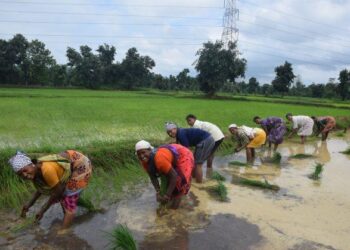
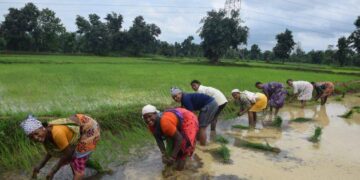
India’s efforts to strengthen agricultural productivity and rural livelihoods are gaining momentum through the Prime Minister Dhan-Dhaanya Krishi Yojana (PMDDKY), a national initiative designed to address persistent farming challenges across 100 selected agricultural districts. The programme brings together existing government schemes and district-level development plans to improve irrigation, diversify crops, expand post-harvest infrastructure and strengthen farmers’ access to agricultural credit.
Recent reports indicate that several participating districts are making progress in water conservation, crop diversification and sustainable farming practices. According to a report published by Financial Express on October 25, 2026, districts including Gadchiroli in Maharashtra, Banka in Bihar, Dantewada in Chhattisgarh and Alluri Sitarama Raju in Andhra Pradesh are implementing locally tailored interventions to address agricultural constraints.
District-specific planning at the centre of the initiative
Launched by Prime Minister Narendra Modi on October 11, 2025, PMDDKY is a six-year programme beginning in the 2025–26 financial year. It targets districts identified for challenges such as relatively low agricultural productivity, low cropping intensity and limited agricultural credit disbursement.
The scheme follows a district-focused approach, recognising that farming conditions vary considerably across India. Rainfall patterns, soil characteristics, irrigation availability, access to markets and the suitability of crops all influence agricultural outcomes. District-level action plans are therefore intended to align government support with local requirements.
PMDDKY is being implemented through the convergence of 36 Central government schemes administered by 11 ministries and departments, alongside state government programmes and private-sector participation. This approach aims to coordinate existing resources rather than treat agricultural development as a collection of disconnected interventions.
The programme focuses on six broad areas: increasing agricultural productivity, encouraging crop diversification and sustainable farming, improving post-harvest storage, expanding irrigation infrastructure, facilitating short- and long-term agricultural credit, and strengthening governance and service delivery.
Gadchiroli expands water conservation and crop choices
Gadchiroli district in Maharashtra provides an example of how locally designed interventions can address water-management challenges. Although the district receives substantial rainfall, its terrain can limit water retention, leaving some agricultural land underutilised outside the monsoon season.
According to the Financial Express report, authorities have completed more than 3,100 farm ponds, recharge shafts and farm-bunding works using resources pooled from eight Central and state schemes.
Improved water retention is creating opportunities for farmers to diversify beyond traditional kharif paddy and millets. Crops such as maize, ragi, vegetables and turmeric are among the alternatives being adopted or promoted.
These interventions illustrate the potential value of combining water conservation with crop planning. Better access to retained water can help farmers explore additional cultivation opportunities, although the long-term effects on yields, farm incomes and groundwater conditions will need to be assessed over time.
High-value horticulture gains attention in Andhra Pradesh
In Alluri Sitarama Raju district in Andhra Pradesh, agricultural development efforts are focusing on alternative crops and livelihood opportunities. Officials cited by Financial Express reported that cannabis cultivation had ceased across more than 7,000 acres since the 2025–26 financial year, while high-value horticultural crops—including avocado, dragon fruit and strawberries—were being promoted across 372 hectares.
The district’s approach involves coordinating resources from multiple programmes covering agricultural development, food processing and edible-oil production. The broader objective is to encourage alternative livelihoods while improving opportunities for agricultural value addition.
The suitability of these crops depends on local climatic conditions, water availability, production costs, technical support and access to buyers. Market linkages and post-harvest handling will be important if farmers are to convert crop diversification into reliable and sustainable income opportunities.
Soil health and sustainable farming in Bihar and Chhattisgarh
Other participating districts are addressing soil quality and the long-term sustainability of agricultural production.
In Banka, Bihar, initiatives include soil testing and the promotion of natural farming and intercropping practices. These approaches aim to improve soil health and organic matter while reducing excessive dependence on chemical fertilisers.
Dantewada in Chhattisgarh is promoting pulses in areas where farmers traditionally grow paddy or leave land uncultivated after the monsoon harvest. Pulses can contribute to crop diversification and, depending on the crop and farming system, help improve soil fertility through biological nitrogen fixation.
Such changes require appropriate seed availability, technical guidance, local demonstrations and reliable markets. Farmers also need practical information about yields, production expenses and potential returns before adopting unfamiliar crops on a large scale.
Monitoring progress and improving access to farm support
The government is using district action plans and performance indicators to track implementation. In a September 2026 review, the Ministry of Agriculture and Farmers Welfare reported that all 100 participating districts had uploaded their District Action Plans.
The review also highlighted improvements in the programme’s average monitored score, which rose from 22.54 in April 2026 to 38.85 in July 2026. These scores measure progress against the scheme’s monitoring framework and should not be interpreted as equivalent percentage increases in agricultural output or farmers’ income.
The programme also places emphasis on farmer training, agricultural extension services, credit access and the use of Krishi Vigyan Kendras as technical partners. Better coordination between government departments and local institutions is intended to help ensure that interventions reach farmers and respond to practical challenges.
Infrastructure and market access remain essential
Improvements in irrigation and cultivation practices must be supported by adequate storage, transportation, processing facilities and access to buyers. Without these complementary services, farmers can face post-harvest losses, limited bargaining power and difficulties selling perishable or newly introduced crops.
The scheme’s emphasis on post-harvest infrastructure and agricultural credit is therefore important. Better storage can help farmers manage the timing of sales, while access to appropriate finance can support investments in equipment, inputs and farm improvements.
Farmer Producer Organisations and other collective institutions can also help aggregate produce, connect growers with larger buyers and improve access to processing and storage. Their effectiveness will depend on professional management, transparent transactions and sustained market demand.
Outlook for Indian agriculture
The progress reported from PMDDKY districts highlights the importance of agricultural planning that reflects local conditions. Water conservation in Maharashtra, crop diversification in Andhra Pradesh, soil-health initiatives in Bihar and pulse cultivation in Chhattisgarh demonstrate different ways districts are responding to their specific challenges.
The next stage will be to assess whether these interventions deliver lasting improvements in farm productivity, profitability, resilience and access to markets. Transparent monitoring, farmer participation and continued coordination among government departments will be central to that assessment.
As PMDDKY moves beyond its first year, its experience could offer useful lessons for strengthening agricultural development across India. Its long-term success, however, will depend not only on the number of projects completed, but also on whether farmers experience measurable and sustained benefits.