

















South India Agriculture Conference Pushes Digital Farming, Precision Agriculture and Climate-Resilient Agriculture
India’s agricultural transformation agenda received fresh momentum as the Regional Agriculture Conference for Southern States brought together the Centre, state governments, agricultural scientists, ICAR institutions and farmers to discuss ways to make farming more productive, technology-driven and resilient.
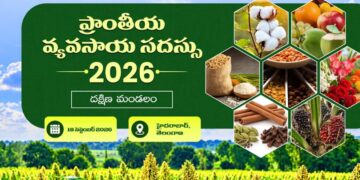
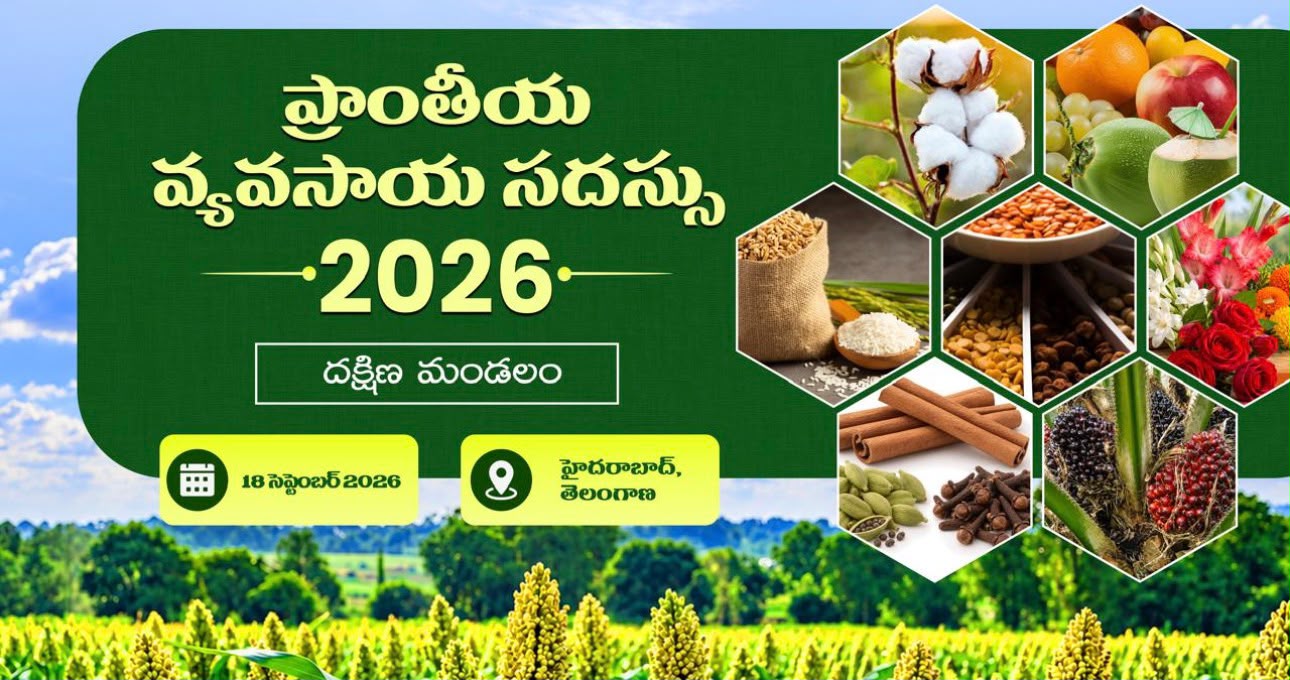
The conference, held in Hyderabad on September 18, 2026, focused on several priorities including Digital Agriculture, Farmer Registry, high-value horticulture, natural farming, integrated farming systems, precision agriculture and strengthening agricultural value chains.
Digital Agriculture at the Centre of the Discussions
One of the major priorities was the expansion of India’s digital agriculture infrastructure.
The conference reviewed progress on Farmer IDs, AgriStack and Digital Crop Surveys, which are intended to create more reliable digital records of farmers, land parcels and crops.
The Agriculture Ministry said Telangana and Karnataka had crossed 75% completion in Farmer ID generation, while Andhra Pradesh, Telangana, Karnataka, Kerala and the Andaman and Nicobar Islands had completed their Digital Crop Surveys. The government also highlighted progress in georeferencing in Tamil Nadu, Karnataka and Telangana.
The government has said Farmer IDs can support the delivery of services such as direct benefit transfers, crop insurance, procurement, credit and other agricultural programmes.
Farmer Registry and AgriStack
The Farmer Registry is a key component of AgriStack, India’s digital public infrastructure for agriculture.
According to the Agriculture Ministry, AgriStack consists of three foundational components: the Farmers Registry, Geo-Referenced Village Maps and Crop Sown Registry. These systems are intended to create a digital foundation connecting farmer identity, land and crop information.
As of February 4, 2026, more than 8.48 crore Farmer IDs had been generated across India, according to government data.
Digital Crop Surveys have also been used to obtain plot-level information about crops, helping authorities improve planning for procurement, agricultural inputs and logistics.
States Showcase Agricultural Innovations
The conference provided southern states with an opportunity to showcase agricultural programmes and technologies being implemented in their respective regions.
Telangana highlighted its Rythunestham initiative, while Andhra Pradesh presented approaches for dealing with weather variability.
Karnataka showcased improved pulse-production practices, while Kerala presented initiatives related to procurement and agricultural marketplaces.
Tamil Nadu highlighted its work in precision farming and high-tech agriculture, demonstrating the growing role of technology in crop production.
The exchange of these approaches is intended to allow states to identify practices that could potentially be adapted or replicated in other regions.
High-Value Horticulture and Value Addition
Another important area discussed at the conference was the development of high-value horticulture and value-added agricultural products.
The focus reflects the growing importance of moving beyond primary agricultural production and improving activities such as processing, packaging, storage and marketing.
Strengthening these parts of the agricultural value chain can help reduce post-harvest losses and create additional opportunities for farmers and agricultural enterprises.
The conference also examined the need for stronger infrastructure covering storage, processing, value addition and marketing.
Push for Natural and Integrated Farming
The conference also included discussions on natural farming and integrated farming systems.
Integrated farming can combine different agricultural activities such as crops, livestock and other farm enterprises, allowing farmers to diversify production and make greater use of available resources.
Natural farming was discussed alongside broader efforts to develop more sustainable and climate-resilient agricultural practices.
Precision Farming Gains Attention
Precision agriculture was another key area highlighted during the conference.
Technology-based farming can use information from sensors, satellites, weather systems, drones and digital platforms to improve decisions related to irrigation, fertiliser application, crop monitoring and pest management.
Tamil Nadu’s high-tech and precision-farming initiatives were among the state-level examples showcased during the conference.
India’s agricultural research ecosystem is also working to move more technologies from laboratories into field applications. ICAR-IIHR, for example, reported releasing 50 technologies and supporting 60 clients during 2025–26, while its programmes reached approximately 7.5 lakh beneficiaries through training and special schemes.
Climate Resilience and Food Security
Climate variability is creating additional challenges for farmers, making resilience a major part of agricultural planning.
The southern conference therefore connected digital agriculture with broader priorities such as weather variability, natural farming, integrated farming and efficient resource management.
The Centre has also been expanding digital advisory tools. In February 2026, ICAR highlighted Bharat-VISTAAR, an AI-powered multilingual agricultural advisory platform designed to provide farmers with information on weather, markets, scientific farming practices and agricultural technologies.
Such systems are intended to improve the availability of agricultural information and support more timely farm-level decisions.
Strengthening Centre-State Coordination
The Agriculture Ministry said the conference was intended to strengthen cooperation between the Centre and southern states and encourage the sharing of successful agricultural practices.
Union Agriculture Minister Shivraj Singh Chouhan subsequently called for time-bound implementation of state commitments and stressed that Farmer ID generation and related digital agriculture work should be completed within stipulated deadlines.
The Minister also announced that the Rabi Conference would be held in Delhi on September 28–29, where states are expected to present detailed plans covering Rabi crops, sowing areas, seed requirements, fertiliser needs and other resources.
Building a More Technology-Driven Farm Economy
The Hyderabad conference highlights how India’s agricultural policy is increasingly combining traditional farming knowledge with digital infrastructure, AI, precision agriculture, improved data systems and value-chain development.
For farmers, the long-term impact will depend not only on developing these technologies but also on ensuring that they are affordable, accessible and practical at the field level.
The Centre and southern states are now focusing on converting digital agriculture initiatives and technological innovations into wider on-ground adoption while strengthening horticulture, food processing, storage and market linkages.
With Farmer Registry, Digital Crop Survey, precision farming, natural farming and high-value agriculture all receiving attention, the southern regional agriculture agenda reflects India’s broader effort to build a more productive, resilient and technology-enabled agricultural sector.