

























Kashmiri Saffron: Why is it so expensive, and how has the market revived?
The price of Kashmiri Saffron is at an all-time high of Rs 3.25 lakh per kg from Rs 2 lakh per kg last year after receiving its GI tag
The legacy of Kashmiri saffron remains an integral part of the region’s heritage, culture, and culinary traditions. However, over the years, production and sale of the spice declined. After many government and international efforts, it seems the market for Kashmir’s saffron may be on an upward trend.
At Rs 3,250 for a 10 gm packet of saffron, the spice is now more expensive than silver. Here is all you need to know about the spice, its history and its rise & fall in production.
What is saffron?
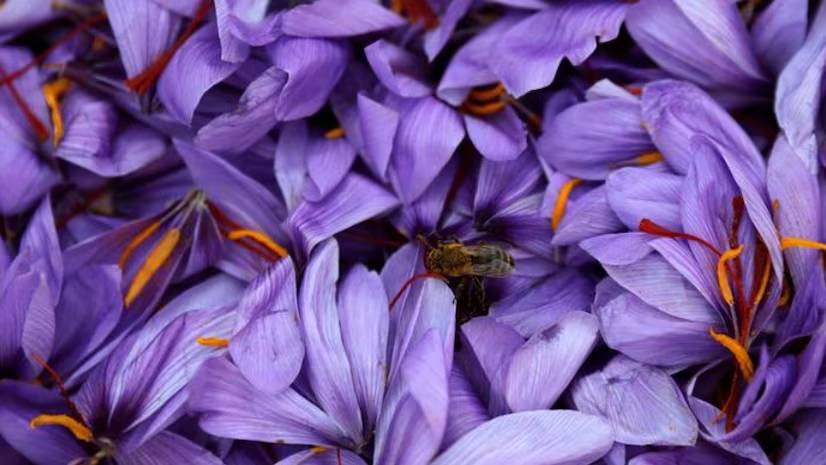
Saffron, known as kesar in India, is a highly prized and revered spice derived from the flower of Crocus sativus, commonly known as the “saffron crocus.” It is renowned for its vivid crimson stigma and styles, which are collected and dried for use as a seasoning, colouring agent in food, and medicinal purposes.
In India, saffron holds a significant place in the country’s culture and traditions, being used in religious practices and even represented on the national flag.

Countries such as Iran, India, and Spain are the top producers of saffron, while other countries like Greece, Morocco, Italy, Azerbaijan, Turkey, and Afghanistan also cultivate this precious spice. However, the saffron grown in the Kashmir region of India stands out for its exceptional quality and exorbitant price.
In India, the revered Kashmiri saffron is harvested in the snow-capped mountains of Pampore, known as the “Saffron capital of India.” This region, located approximately 14 kilometres away from Srinagar, is home to more than 20,000 families dedicated to cultivating Kashmiri saffron.
How is the spice cultivated?
The cultivation process begins with the delicate task of picking and collecting the purple crocus flowers. Each flower is divided into three parts—the petals, the yellow strands, and the red strands known as stigmas, from which saffron is derived. There are only three or four stigmas in each flower.
The saffron crocus flowers bloom for just six weeks a year, from late September to early December. Harvesting must be done in the early morning to preserve the delicate chemical structure of the saffron, as sunlight can affect its quality. It can take 160,000 flowers to yield just one kilogram of saffron, making it a labour-intensive and time-consuming process.
According to a research conducted in 2021, called Agro-Climatic Suitability Evaluation for Saffron Production in Areas of Western Himalaya, published by Frontiers, Saffron “grows well in friable, loose, low density, well-irrigated and well-drained clay calcareous soils with an optimum pH range between 6.8–7.8 and electrical conductivity.
The quality of saffron depends entirely on environmental conditions, content, and composition of secondary metabolites.
#agriculture #technology #agri-tech #scheme #research #farmers #resources #economy #pollution #startup