





















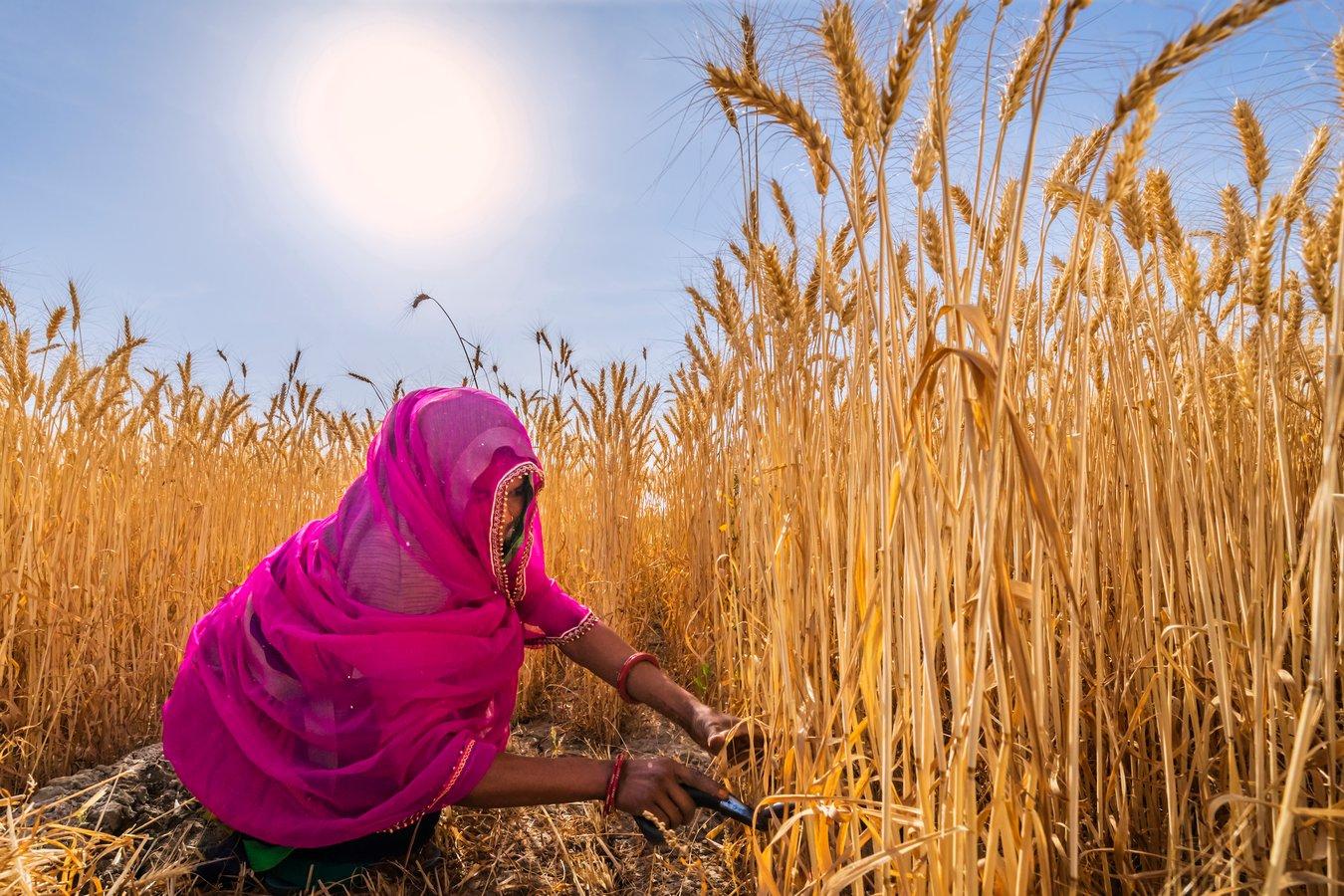
India’s Wheat Sowing Faces a 5–10% Decline Risk as Water Shortages Pressure Rabi Crop Planning
Subheading: Poor monsoon rainfall, limited irrigation water and changing crop economics may prompt farmers in several Indian states to reconsider wheat cultivation for the 2026–27 Rabi season.
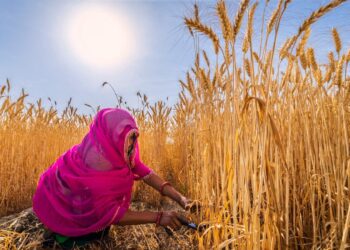
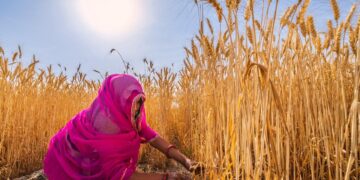
India’s wheat cultivation could face a setback during the 2026–27 Rabi season, with the area under the crop potentially declining by 5–10% amid water shortages and changing farm economics. According to industry representatives cited by The Economic Times, farmers in Rajasthan, Gujarat, Madhya Pradesh and parts of Maharashtra may reduce wheat planting, switch to alternative crops or leave some fields uncultivated.
The concerns come as farmers prepare for the winter cropping season following deficient monsoon rainfall in several agricultural regions. Limited irrigation water and concerns about returns from wheat cultivation could influence sowing decisions, potentially reshaping the country’s winter crop mix.
Water Scarcity Creates Challenges for Wheat Cultivation
Wheat is one of India’s most important foodgrain crops and a key contributor to national food security. Its cultivation requires suitable temperatures and adequate soil moisture, particularly during crop establishment and critical growth stages.
However, below-normal rainfall in several regions has affected soil moisture and water availability. Farmers who depend on reservoirs, groundwater and rainfall may face higher irrigation costs or difficulties securing sufficient water for the crop.
The potential impact is particularly concerning in parts of Rajasthan, Gujarat, Madhya Pradesh and Maharashtra, where water availability may influence whether farmers proceed with wheat cultivation this season.
In water-stressed areas, farmers could prioritise crops that are better suited to local conditions and require comparatively less irrigation.
Crop Economics May Encourage Farmers to Diversify
Water availability is not the only factor influencing wheat sowing decisions. The economics of competing crops may also affect farmers’ choices.
Industry representatives have pointed to concerns about wheat’s minimum support price (MSP) increase and the relative attractiveness of other Rabi crops, including mustard, chickpea and other pulses.
Where market prices and expected returns favour alternatives, farmers may consider changing their crop plans. Such decisions depend on local soil conditions, available water, seed access, procurement arrangements and the prices farmers expect to receive.
A shift towards pulses and oilseeds could also support India’s efforts to strengthen domestic production of these commodities and reduce reliance on imports, provided the alternatives are suitable for the region.
Government Emphasises Water-Based Crop Planning
The Union Agriculture Ministry has highlighted the importance of scientific crop planning and climate resilience ahead of the Rabi season.
At the National Agriculture Conference – Rabi Campaign 2026, held in New Delhi, Union Agriculture Minister Shivraj Singh Chouhan called on states to prepare their crop strategies based on local water availability, soil moisture and weather conditions. The government also stressed timely availability of agricultural inputs, scientific monitoring and coordination between central and state authorities.
These priorities are particularly important in regions where limited irrigation resources could make water-intensive crop choices riskier.
State-level crop advisories, timely access to seeds and fertilisers, and better information about local weather and water conditions can help farmers make more informed decisions before sowing.
Government Wheat Stocks May Help Cushion Market Pressure
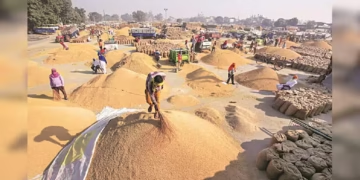
A possible decline in wheat acreage raises questions about future production and foodgrain prices. However, industry representatives cited in the report expect existing government stocks to provide a buffer against a potential supply shortfall.
The Food Corporation of India (FCI) manages central foodgrain stocks and undertakes operations linked to government procurement and market supply. The Economic Times report also noted that FCI had issued a wheat-sale tender under the Open Market Sale Scheme in 2026, a mechanism used to improve market availability and manage government stocks.
The extent to which stocks can offset lower production will depend on actual sowing, crop yields, procurement and demand over the coming months. The projected reduction in wheat acreage should therefore be treated as an early-season estimate, not a confirmed decline in production.
Outlook for the 2026–27 Rabi Season
The coming months will be important for determining the actual area planted under wheat and other winter crops. Rainfall during the sowing period, reservoir levels, irrigation access, crop prices and government support measures will all influence farmers’ decisions.
For policymakers, the challenge will be to balance food security with the need to protect farm incomes and use scarce water resources efficiently. For farmers, choosing crops suited to local growing conditions and available moisture may be crucial to limiting risks this season.
Conclusion: India’s wheat-sowing outlook highlights the growing connection between rainfall variability, irrigation availability and agricultural economics. Although government stocks may help cushion short-term market pressure, the final impact on wheat production and prices will become clearer only as sowing progresses and crop conditions develop.