
























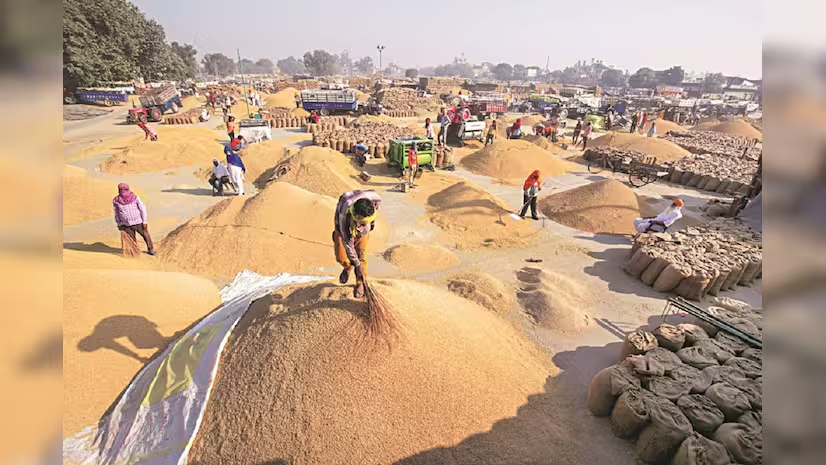
Bumper Paddy Harvest Puts Pressure on Procurement and Storage Systems in Punjab and Haryana
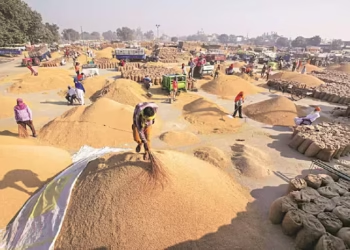
A strong paddy harvest across Punjab and Haryana is creating fresh challenges for India’s agricultural procurement system, with farmers reporting delays in selling their produce, congestion at grain markets and difficulties in moving harvested grain into storage. While favourable growing conditions have supported higher yields, the pressure on procurement infrastructure is raising concerns about timely payments, grain quality and farmers’ incomes.
According to a report published by Business Standard on October 11, farmers in parts of Haryana have been waiting several days at mandis to sell their paddy. Procurement delays, slow movement of previously purchased grain and concerns over moisture-related price deductions have added to the difficulties. Punjab is also facing concerns as its procurement operations gather pace.
High Yields Increase Pressure on Grain Markets
This year’s favourable growing conditions have contributed to expectations of a strong paddy harvest in northern India. However, when crop arrivals exceed the pace at which procurement agencies can purchase, transport and store grain, farmers may be forced to wait longer before completing sales.
In Punjab, the Centre has set a procurement target of 180 lakh metric tonnes of paddy for the current season. Farmers and market representatives have expressed concern that actual arrivals could exceed this target, particularly given the extensive area under paddy cultivation and expectations of strong yields.
The situation highlights a recurring challenge in agricultural supply chains: a successful harvest does not automatically translate into higher farm income if the systems responsible for buying, transporting and storing the crop cannot keep pace.
Moisture Levels and Minimum Support Price Concerns
Paddy moisture content has emerged as another important concern during procurement. Grain that exceeds the prescribed moisture limits may require additional drying or may face deductions under applicable procurement rules.
Farmers have reportedly raised concerns about selling prices falling below the announced Minimum Support Price (MSP) in some markets because of moisture-related deductions and procurement bottlenecks. The MSP is intended to provide a government-announced price benchmark for eligible produce procured under the applicable arrangements.
The challenges underline the importance of transparent quality assessment, adequate drying facilities and clear communication between procurement agencies, millers and farmers. Timely testing and consistent implementation of procurement rules can help reduce disputes and uncertainty at grain markets.
Storage Constraints Add to Procurement Challenges
Storage capacity is another pressure point. Existing stocks from previous procurement seasons can occupy warehouses and other facilities just as fresh paddy begins arriving. Delays in moving purchased grain to mills, processing it into rice and transferring it to storage can slow down the entire procurement chain.
The Department of Food and Public Distribution has previously identified storage expansion as a priority. In a September 1, 2026, review, the department announced that the New Storage Policy envisages an additional 131 lakh metric tonnes of storage capacity. The government also reviewed procurement arrangements for the 2026–27 Kharif Marketing Season.
The new capacity is intended to strengthen India’s foodgrain storage infrastructure, although its practical impact will depend on implementation and the availability of facilities in areas facing the greatest pressure.
Why the Issue Matters Beyond Punjab and Haryana
Punjab and Haryana play an important role in India’s public foodgrain procurement and rice supply chains. Disruptions in these states can affect farmers, rice millers, transport operators, procurement agencies and the wider public distribution system.
For farmers, longer waiting periods can increase transport and labour costs, complicate the management of harvested produce and delay access to sale proceeds needed for household expenses and the next agricultural season.
For policymakers, the situation highlights the need to align procurement planning with actual crop arrivals, improve coordination between purchasing agencies and rice mills, expand storage where required and strengthen grain drying and handling infrastructure.
The Way Forward
A more responsive procurement system would combine realistic production estimates with flexible arrangements at individual mandis. Faster lifting of purchased grain, adequate storage, transparent quality checks and better coordination between state authorities and central agencies could help reduce congestion during peak harvest periods.
Longer-term measures may also include diversifying cropping patterns where agronomically suitable, improving water-use efficiency and expanding market opportunities for farmers. Such changes require careful planning, since paddy cultivation remains an important source of income and a central component of India’s food security system.
As procurement continues across northern India, the key challenge will be ensuring that a strong harvest benefits farmers rather than overwhelming the infrastructure designed to support them.
The paddy procurement situation demonstrates why agricultural productivity must be supported by efficient logistics, sufficient storage and transparent market systems. Timely procurement is essential to protect farmer incomes and maintain the reliability of India’s foodgrain supply chain.