























Five Key Trends to Watch out for in AgriTech
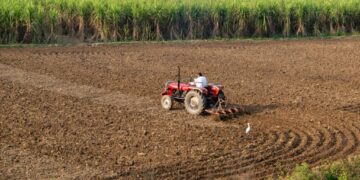
Technological advancements in agriculture have been empowering farmers to efficiently meet the ever-growing demand for food and raw materials for decades. The invention of tractors and other mechanized agricultural equipment at the turn of the 20th century empowered farmers to produce agricultural products faster and fulfill market demand more quickly.
In 1959, the discovery of drip irrigation allowed farmers to utilize water – a critical resource – more optimally and reduce wastage. As the human population across the world continues to increase exponentially and climate change becomes an ever-growing threat, it is imperative to continue developing new innovations in agriculture that can meet these high-stakes demands.
And the impacts are not only environmental. In India today, as with many other nations around the world, agriculture is considered the backbone of the economy – adding a significant financial impact to these technologies as well.
According to a recent report by Avendus Capital, Indian agritech is expected to lead the next decade’s technology-first value creation opportunity, growing at a CAGR of 50 percent over the next five years and addressing a $34 billion market by 2027. It is expected to replicate the success of other tech sectors, creating unicorns within only a couple of years.
So what are some of the key trends and innovations driving such growth in agritech for 2023 and beyond?
Agricultural AI
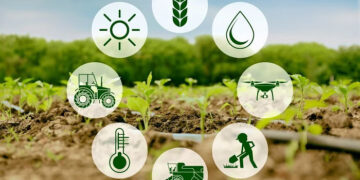
Like many other sectors, the agriculture ecosystem offers volumes of unstructured data which can be processed to build meaningful input for AI-driven solutions. As data is collected from various sensors, either placed in crop fields or on mechanized farming equipment, AI algorithms can perform detailed analytics to enhance precision agriculture.
For example, AI can play a crucial role in optimizing water management and energy consumption by monitoring the distribution process and analyzing the output data for desired results, leading farmers to make better decisions about resource allocation. Machine learning and deep learning techniques are also being used in soil and crop monitoring in a number of ways, and are rapidly becoming an integral part of the agriculture ecosystem.
Agricultural Robotics
As the demand for food production and agriculture increases with the rise in population, the actual supply of agricultural labor to meet that demand continues to pose significant challenges.
Turning to mechanized solutions to address that problem is nothing new – motorized tractors and farm equipment had significant impacts on reducing manual labor throughout the planting cycle. Agricultural robotics is the next phase in that evolution. Mobile farming robots can collect real-time data in the fields and, with the help of AI, make real-time decisions (such as whether to spray fertilizer or pesticides) based on that data.
Farmers can utilize robot swarms to complete repetitive and time-consuming tasks across an entire field at once. Such automation reduces resource consumption and human error, resulting in cost efficiency and improved crop quality.
Drones
Unmanned aerial vehicles (UAVs), commonly known as drones, can provide farmers with a bird’s-eye view of their crop fields. This helps to monitor plant health, handle livestock management, perform soil surveys, check weather conditions, and much more.
Data collected from drones can help farmers to understand the current state and progress of crops to be able to design appropriate solutions. For example, drone imagery can inform farmers about the overall growth of crops and identify pockets infested by pests or areas where the soil is barren, leading to informed decisions on the right treatment for pest control and soil restoration.
Internet of Things (IoT)
Data collection is becoming an integral part of the agricultural process. Farmers are turning to IoT solutions to make an increasing number of decisions, such as the type of pesticides and fertilizers to be used for reaching optimal efficiency, monitoring weather conditions, controlling and managing production processes, and lowering production risks.
The practice of employing IoT sensors, such as RFID chips, enables farmers to optimize all aspects of their work, encompassing both crops and livestock. IoT can also help farmers to observe and manage their fields and cattle remotely by equipping their properties with smart data-driven devices.
Big Data Analytics
Data is key for any modern technology to function efficiently. As illustrated in the previous points, innovation is all about utilizing the available data to build the right solutions. Employing tools and methods for meaningfully analyzing this data makes agricultural production more adept, practical, and well-regulated, while being sustainable for the environment and economy.
While the growing momentum in agricultural technology indicates a bright future for this sector, there remain many challenges with the adoption and implementation of these technologies in many critical crop-producing parts of the world. In India for example, widespread adoption is hindered by the lack of access to technological resources and inherited dependency on traditional farming methods for many rural communities.
To tackle this, governments and administrations need to empower farmers with the right knowledge, resources, and training to fully actualize the benefits that agritech can bring to their local economies as well as their personal livelihoods.
At the G20 Summit 2022 in Indonesia, worldwide leaders committed to supporting the adoption of innovative practices and technologies, including digital innovation in agriculture and food systems, to enhance productivity and sustainability.
The goal of these efforts is to promote farmers’ and fishers’ livelihoods and increase income through raising efficiency and providing equal access to food supply chains. More efforts need to continue to be made to distribute access to agricultural technology, particularly in those nations where agriculture comprises a significant portion of the economy.
Agritech offers powerful solutions to address several of the major worldwide challenges for optimum food production. This amalgamation of human skill and powerful data analytics technology enables farmers to extract the best possible results from agricultural processes and systems. As we step into the future, agritech has the potential to be at the forefront of the technological transformations that will create truly sustainable communities.
#agriculture #technology #agri-tech #scheme #research #farmers #resources #economy #pollution #startup